Diabetic and rheumatic footbed
- 02 December 2025
- Mestre (VE)
- Start 9 a.m.
- 8 CME credits
Diabetic and rheumatic foot clinic and intervention criteria
The practical course is designed to provide participants with knowledge in-depth clinical and biomechanical features of the diabetic and rheumatic foot, with a focus on the associated risks and prevention of plantar ulcers. The main aspects of pathophysiology and necessary precautions in orthotic design were addressed during the training day, offering clear criteria for choosing the most suitable materials in terms of protection, cushioning and safety. The course provided an understanding of how to correctly set up the orthotic intervention in the presence of delicate clinical conditions, with an approach geared towards patient protection and device functionality.
Materials, practical realisation and functional verification of the footbed
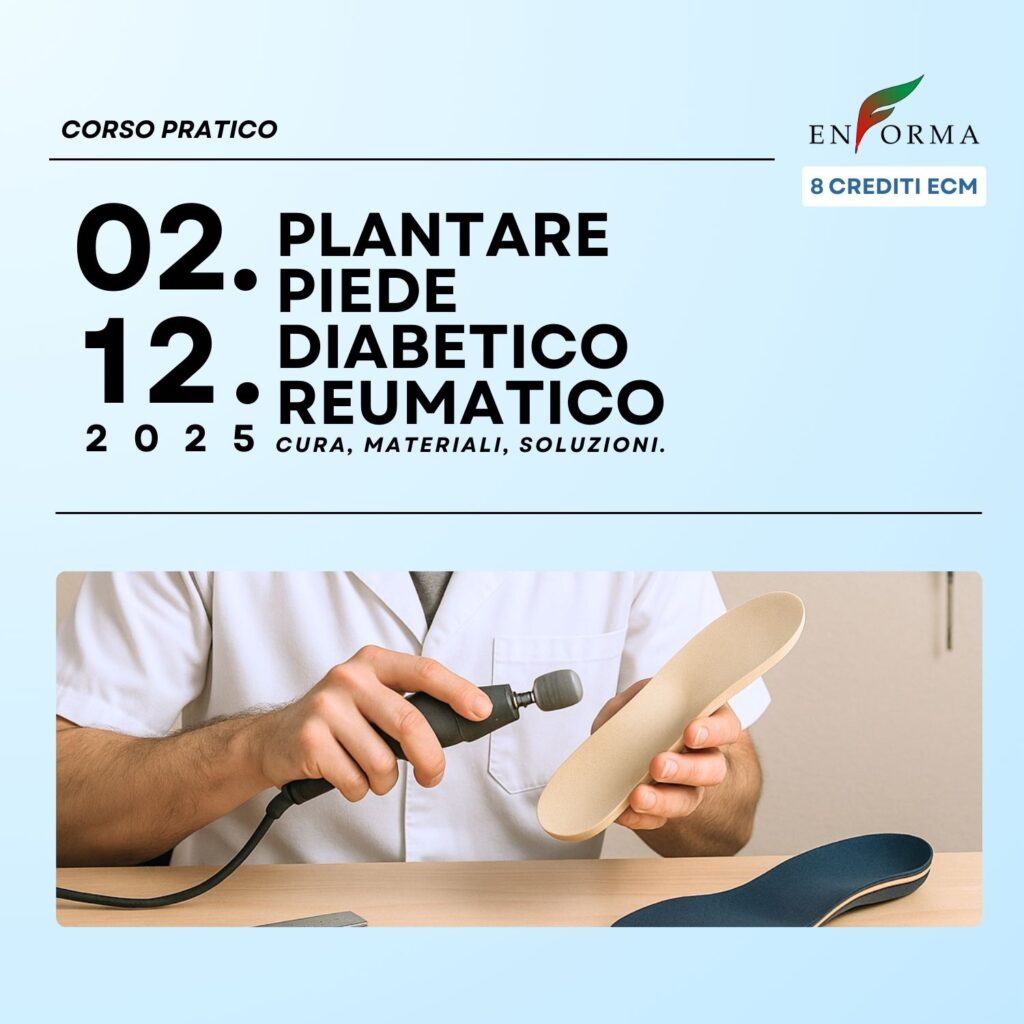
A central element of the course was the practical approach, focused on the guided production of insoles for diabetic and rheumatic feet through the use of specific materials such as low-density soft EVA, antibacterial linings and technical microfibres. The participants worked on real models, tackling the phases of material selection, thermoforming, fitting, insertion of reinforcements and targeted drains in sensitive areas, up to the aesthetic and functional finishing of the device. The exercises and the final comparison made it possible to assess the comfort, protection and functionality of the footbed made, translating theory into operational competence and concluding the course with CME verification valid for the recognition of training credits.